

Environment Canada has issued an air quality advisory for Deep River and the upper Ottawa Valley today.
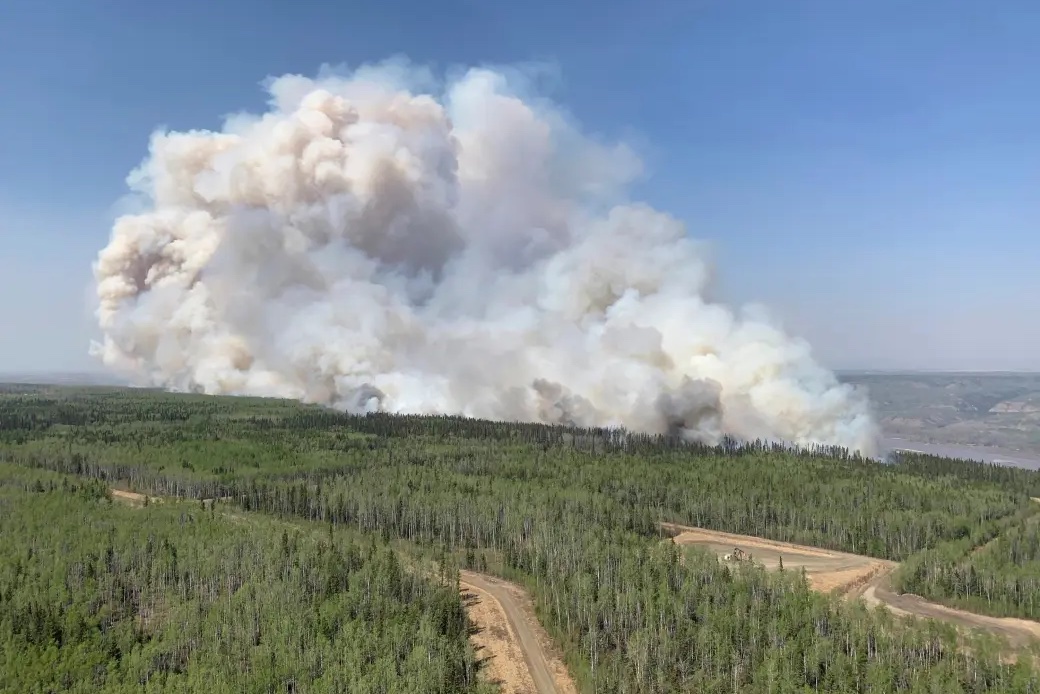
In an advisory issued at 4:38 am, area residents are warned that smoke plumes from forest fires over Quebec will result in deteriorated air quality Saturday.
“Wildfire smoke can be harmful to everyone’s health even at low concentrations. Everyone can take action to reduce their exposure to wildfire smoke,” the advisory says.
Environment Canada says “people with lung disease (such as asthma) or heart disease, older adults, children, pregnant people, and people who work outdoors are at higher risk of experiencing health effects caused by wildfire smoke.”
“Stop or reduce your activity level if breathing becomes uncomfortable or you or someone in your care feel unwell. Contact your health care provider or local health authority if you develop severe symptoms or need advice,” the advisory continues.
“People respond differently to smoke. Mild irritation and discomfort are common, and usually disappear when the smoke clears. Drinking lots of water can help your body cope with the smoke.”
Environment Canada recommends that if you have an HVAC system in your home, to use the “highest rated MERV filter for your system (ideally rated 13 or higher) and set the fan to recirculate air constantly.”
“You can also use a portable High Efficiency Particulate Air (HEPA) air cleaner. Keep your doors and windows closed if the temperature in your home is comfortable.
“Take a break from the smoke at a location in your community where you can find clean, cool air.”
If you must spend time outdoors, Environment Canada recommends that a “well-fitted respirator type mask (such as a NIOSH certified N95 or equivalent respirator) that does not allow air to pass through small openings between the mask and face, can help reduce your exposure to the fine particles in smoke.”
“These fine particles generally pose the greatest risk to health. However, respirators do not reduce exposure to the gases in wildfire smoke.
“It is important to listen to your body and reduce or stop activities if you are experiencing symptoms.
“Be sure to check on people in your care and those around you who may be more susceptible to smoke.”
For more information, visit www.canada.ca/en/environment-climate-change/services/air-quality-health-index/wildfire-smoke.html.
To read the full advisory, click here.
- For more local news, pick up a copy of this week’s NRT. To get the NRT delivered directly to your mail box or inbox each week, subscribe here.
